Embedding the eight essential skills in your classroom
By Sharon Kennedy · Published 30 June 2026
6 min read
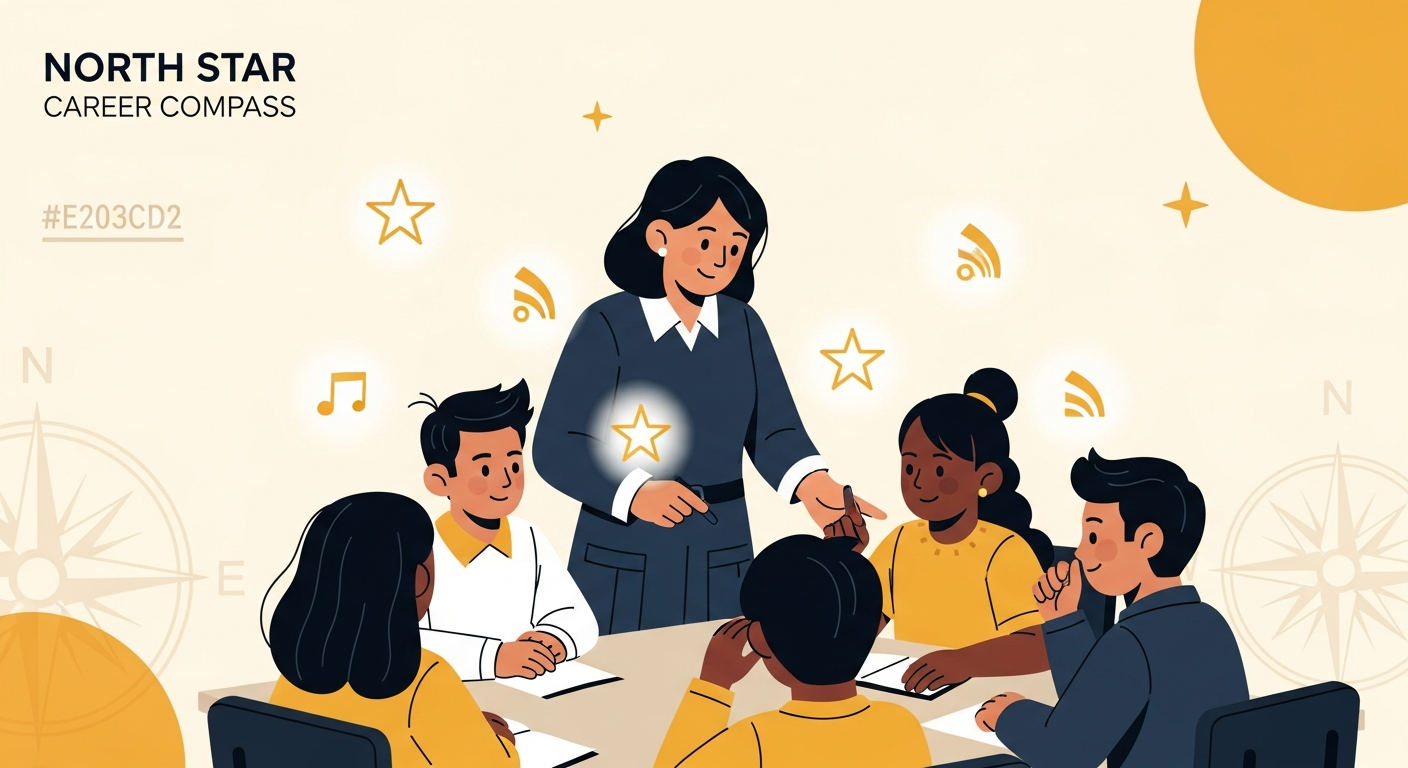
Ask any employer what they look for in a young recruit and you'll rarely hear them lead with grades. They talk about whether someone can communicate, work in a team, solve a problem when the obvious answer runs out, and keep going when a task gets hard. Those are the things that decide whether a young person thrives in their first role — and they're learnable, in any classroom, in any subject.
The Skills Builder Universal Framework 2.0 names eight of them: Listening, Speaking, Problem Solving, Creativity, Adapting, Planning, Leadership, and Teamwork. The framework's strength is that it treats each one not as a fixed trait some students happen to have, but as a skill that builds in stages — from the very foundations through to advanced — so there is a clear next step for every student, wherever they're starting from.
The good news for busy teachers: embedding these skills doesn't mean a new scheme of work or an extra lesson you don't have time for. It means naming and stretching skills students are already using in the work you already set. Here are five ways to do it.
1. Name the skill, not just the task (all eight skills)
Students build essential skills constantly without realising it. A group project is Teamwork and Listening; a science investigation is Problem Solving and Planning; a presentation is Speaking. The single highest-leverage move is to make the skill visible: "In this task you're practising Problem Solving — let's notice how." When students can name what they're building, they can build it on purpose. A simple skill of the lesson on the board, referenced at the start and the end, costs nothing and changes how students see their own work.
2. Build in stages, not all at once (Speaking, Listening)
The framework's step-by-step structure is a gift for differentiation. Speaking doesn't begin with a confident assembly talk — it begins with speaking clearly to one person, then a small group, then a larger one, with each step rehearsed before the next. For a student who finds presenting overwhelming, start where they are: a recorded answer, a contribution to a pair, a small-group share before any whole-class talk. You're not lowering the bar; you're building towards it one secure step at a time.
3. Make Problem Solving and Creativity routine (Problem Solving, Creativity)
Set tasks that have more than one right route, then resist handing over the method. "Here's the goal and here's the constraint — how would you get there?" works in maths, design, history and science alike. The struggle in the middle is the skill being built. Creativity grows the same way: through low-stakes, frequent invitation to generate ideas before judging them. Both skills strengthen when students learn that a first wrong attempt is information, not failure.
4. Plan for every kind of mind (Adapting, Planning)
A neuroinclusive classroom assumes students think and process differently — and designs for it from the start, rather than retrofitting support. Give instructions in more than one form (spoken and written). Break Planning into visible steps a student can tick off. Offer choice in how a skill is demonstrated. Treat a student who finds group noise draining or transitions difficult not as lacking Teamwork or Adapting, but as someone who builds those skills best in smaller steps and calmer conditions. What helps neurodivergent students almost always helps everyone.
5. Let students lead something real (Leadership, Teamwork)
Leadership isn't a badge or a title — it's getting a group to do something together. Hand students genuine responsibility: leading a group investigation, coaching a peer through a skill they've mastered, organising part of a class event. Then step back and let them coordinate, delegate and handle the wrinkles. Leading early, long before any job, widens a young person's sense of what they're capable of — and Teamwork is consistently one of the biggest factors in whether a group's output beats the sum of its parts.
None of this asks you to teach anything new. It asks you to make the invisible visible — to name the eight essential skills students are already using, and to stretch them one secure step at a time. Do that consistently and you're not only raising attainment. You're sending young people into the world able to walk into a room, a team or an interview and hold their own. (For a plain-English overview of all eight skills and how they map onto real careers, see our essential skills overview.)